Nichts Neues?

„Nichts Neues“ ist nicht die Wahrheit über die Welt, sondern ein Satz, der daran scheitert, dass er Geschwindigkeit, Maßstab und Wirkung nicht ernst nimmt.

Die Behauptung, es gebe „nichts Neues“ auf der Welt, hat mich lange beschäftigt. Ein alter Freund sagte das einmal mit großer Selbstverständlichkeit: Alles sei Wiederholung, alles nur Variation, alles nur anders ausgelegt. Diese Aussage blieb hängen. Sie wirkte auf mich so stark, dass ich später sogar ein Projekt für elektronische Musik „Nix Noise“ nannte.

Damals war dieser Titel nicht nur ironisch gemeint. Er war Ausdruck eines echten Konflikts: Kann Kunst überhaupt noch etwas Neues behaupten? Ist ein Klang, ein Rhythmus, eine Form nicht immer schon Teil einer Wiederholung? Ist elektronische Musik nicht besonders anfällig für diesen Verdacht, weil sie ständig mit Schleifen, Mustern, Maschinen, Wiederkehr und Variation arbeitet?

Heute würde ich sagen: Die Aussage „Es gibt nichts Neues“ ist nicht tief, sondern unterbestimmt. Sie klingt philosophisch, aber sie hält nicht viel aus.

Ihr Fehler liegt darin, dass sie Ähnlichkeit mit Gleichheit verwechselt. Nur weil sich Grundmotive wiederholen, bleibt ihre Wirkung nicht dieselbe. Menschen bewegen sich seit jeher fort; trotzdem ist eine Pferdekutsche nicht dasselbe wie ein Flugzeug. Menschen kommunizieren seit jeher; trotzdem ist ein Brief nicht dasselbe wie eine Nachricht in Echtzeit. Menschen rechnen seit jeher; trotzdem ist eine Maschine, die in Sekunden ausführt, wofür Menschen Jahrhunderte bräuchten, nicht einfach „dasselbe Rechnen“.

Der entscheidende Punkt ist Geschwindigkeit. Und mit ihr Maßstab, Zugriff, Reichweite und Wirkung.

Geschwindigkeit ist nicht bloß eine quantitative Steigerung. Ab einem bestimmten Punkt verändert sie die Lage selbst. Eine Erkenntnis, die erst nach dem eigenen Leben verfügbar wird, ist nicht dieselbe Erkenntnis wie eine, die im Moment einer Entscheidung verfügbar ist. Eine Bewegung über Kontinente ist nicht dieselbe Bewegung, wenn sie Wochen dauert oder Stunden. Eine Wiederholung ist nicht dieselbe Wiederholung, wenn sie durch Maschinen, Speicher, Algorithmen oder globale Netze skaliert wird.

Das Neue entsteht also nicht zwingend dadurch, dass ein völlig unbekanntes Prinzip auftaucht. Oft entsteht es dadurch, dass ein bekanntes Prinzip durch Beschleunigung, Verdichtung oder Skalierung seine Bedeutung wechselt.

Genau deshalb erscheint mir die Formel „Nichts Neues“ inzwischen als hohle philosophische Geste. Sie ist oft weniger Erkenntnis als Affekt: politischer Affekt, intellektueller Überdruss, Müdigkeit, Abwehr gegen Technik, Abwehr gegen Gegenwart. Sie behauptet Übersicht, wo eigentlich nicht genau genug unterschieden wird.

Natürlich ist nicht jede Neuerung Fortschritt. Und natürlich ist technologische Entwicklung nicht automatisch gut. Aber daraus folgt nicht, dass sie nichts Neues hervorbringt. Im Gegenteil: Gerade weil Technologie neue Wirklichkeiten erzeugt, muss man sie ernst nehmen.

Mein Projekt „Nix Noise“ steht für mich deshalb heute unter einem anderen Vorzeichen. Der Titel bleibt, aber er kippt. Er bezeichnet nicht mehr die Zustimmung zu dieser Behauptung, sondern den Punkt, an dem sie zerfällt. Gerade elektronische Musik zeigt das: Wiederholung ist dort nicht bloß Wiederkehr des Gleichen. Durch Geschwindigkeit, Schichtung, Automation, Feedback, Speicherung und minimale Verschiebung entsteht aus Wiederholung eine neue Wahrnehmung.

Das Alte bleibt nicht alt, wenn sich seine zeitlichen Bedingungen verändern.

Vielleicht gibt es wenige völlig neue Grundmotive. Aber es gibt neue Lagen. Neue Schwellen. Neue Wirklichkeiten. Und das reicht aus, um der Behauptung „Es gibt nichts Neues“ entschieden zu widersprechen.

Synthesized Field Recording


Synthesized Field Recording is a seven-part electronic work created during the Corona period as part of the Denkzeit Fellowship of the Cultural Foundation of the Free State of Saxony.

The project explores repetitive sonic structures and their emotional resonance. Starting from moments within everyday sound environments — motorway, forest, construction site, hospital, public space — the work approaches these places not as nostalgic memories, but as social and sonic studies of landscapes and everyday situations that were absent, restricted, or radically transformed during that time.

The project begins with the idea of a field recording without an actual field recording: places, situations, and acoustic environments are not documented through recorded audio material, but synthetically reconstructed. In this process, I deliberately avoided the use of samples. Samples are easy to obtain, strongly loaded with listening conventions, and the randomness of recorded noise often allows too little control over the actual sound.

Through reverse engineering and sound design, I developed a form of synthesized field recording. The individual sounds of the resulting drones and sound clusters were generated digitally with an FM synthesizer, the Elektron Digitone. The soundscapes are therefore not based on recorded audio material, but on complex modellings of sine waves.

FM synthesis is more of a mathematical process than an intuitive one. Using this method makes it possible to isolate triggers of emotional response and to pursue them precisely through sound. For my work as a composer, this project functions as basic research: it deepens my understanding of sound generation, sonic perception, and the emotional effect of constructed acoustic environments.

Funded by the Cultural Foundation of the Free State of Saxony. This measure is co-financed by tax funds on the basis of the budget adopted by the Saxon State Parliament.

Gelbe Post – Graue Post

The work refers to the historical distinction between the “yellow post” and the “grey post” in Germany. While the yellow post stood for conventional postal services — letters, parcels and the circulation of physical messages — the grey post referred to telecommunications: telephone networks, switching systems and long-distance communication.

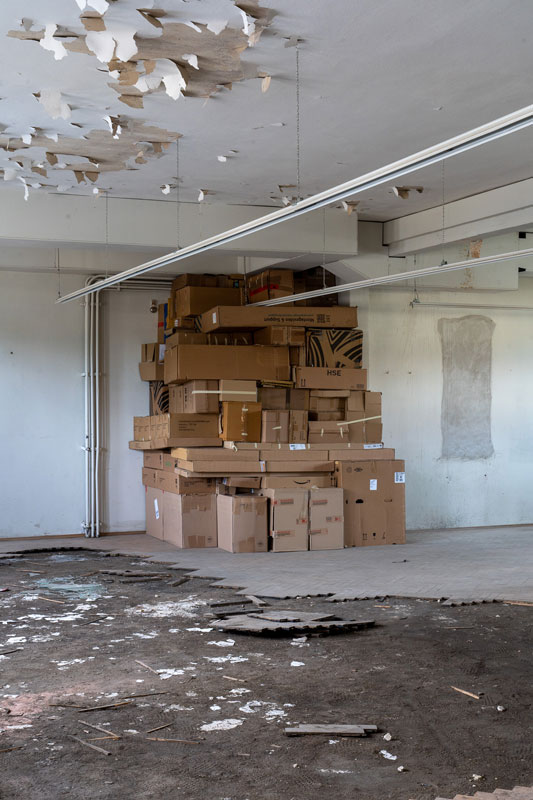
In the installation, the cardboard layering relates to the material world of the yellow post: packaging, transport, storage and physical traces of communication. The sound installation, on the other hand, connects to the grey post and its invisible infrastructure of signals, conversations and transmission.

Since the site is located in the former GDR, the work also touches on histories of surveillance, interception and listening. Voices, field recordings and fragmented narratives form shifting sonic layers that evoke a world of overheard communication and hidden technical systems.

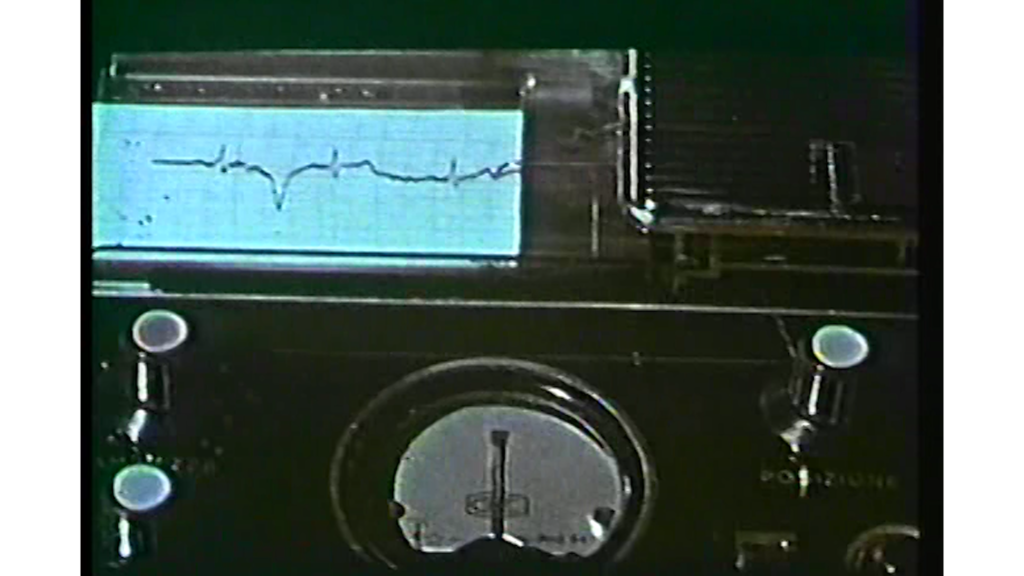
The visible relay cabinet became the acoustic source of the installation. Equipped with a microcontroller, it generated and transmitted sound in real time, turning the former telecommunications object into an active resonating body.

Kartonage, Fieldrecordings // mehrteilige Schichtung und Klanginstallation mit Konstantin Svechtarov // #1 3,25 x 2,25 x 2 m / #2 2,20 x 2,10 x 2,84 m // Alte Post / Gransee // 2022 // Fotos: Konstantin Svechtarov

Kooperation mit Kunstverein kf4 e.V.Wolfgang Grassl (Architekt) und terraplan (Bauprojektentwickler).
Gefördert im Rahmen von NEUSTART KULTUR

Cardboard, field recordings // multi-part layering and sound installation with Veronika Schneider // #1 3.25 × 2.25 × 2 m / #2 2.20 × 2.10 × 2.84 m // Alte Post / Gransee // 2022 // Photos: Konstantin Svechtarov

In cooperation with Kunstverein kf4 e.V., Wolfgang Grassl (architect) and terraplan (project developer).

Funded as part of NEUSTART KULTUR.

GRUND


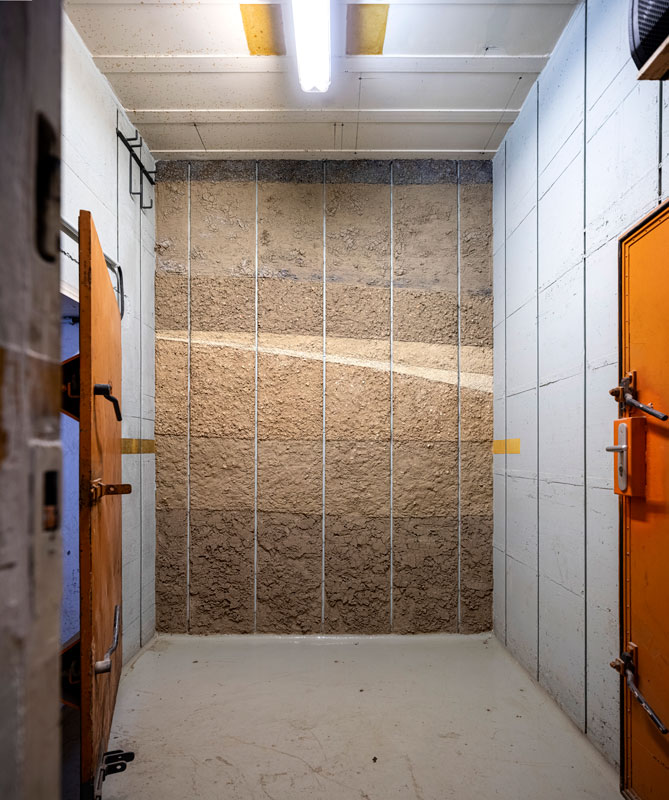
Erd- und Sinuswellenschichten // Schichtung und Klanginstallation mit Veronika Schneider // 3,60 x 2,50 m x ∞ // ehemaliger Atom-Bunker der NATO / Hemau // 2022 // Foto: Herbie Stolz

Das Kunstprojekt Bunker 22 wird durch das Förderprogramm „Verbindungslinien“ des Bayerischen Staatsministeriums für Wissenschaft und Kunst gefördert.

Earth and sine wave layers // Layering and sound installation with Veronika Schneider // 3.60 × 2.50 m × ∞ // former NATO nuclear bunker / Hemau // 2022 // Photo: Herbie Stolz

The art project Bunker 22 is funded by the “Verbindungslinien” funding program of the Bavarian State Ministry of Science and the Arts.

The 22 Body Problem

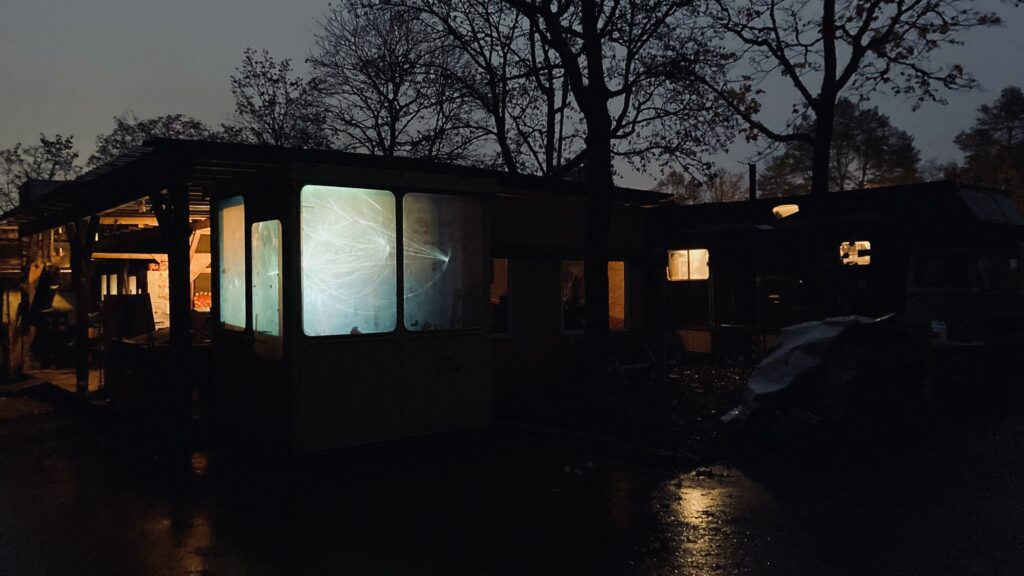
„The 22 Body Problem“ – an audio/video installation as part of my artist residency at Stattpark OLGA October 2024

During my one-month residency at Stattpark OLGA in Munich, I had the opportunity to further develop my artistic practice in a unique and inspiring environment.

The central project that emerged during this time was my audio-video installation “22-Body Problem”. The work is based on the N-body problem in physics and translates its complex, chaotic interactions into a visual and musical form. Through sound, movement and generative structures, the installation explored the tension between order, instability and transformation.

Stattpark OLGA also offered a valuable space for exchange. Encounters with visitors, residents and the cultural life of Munich gave me new artistic impulses and helped me reflect on how the work is perceived in a direct, shared context.

The residency was an important and enriching experience. It gave me time, space and perspective — and opened up new ideas that will continue to influence my future work.